
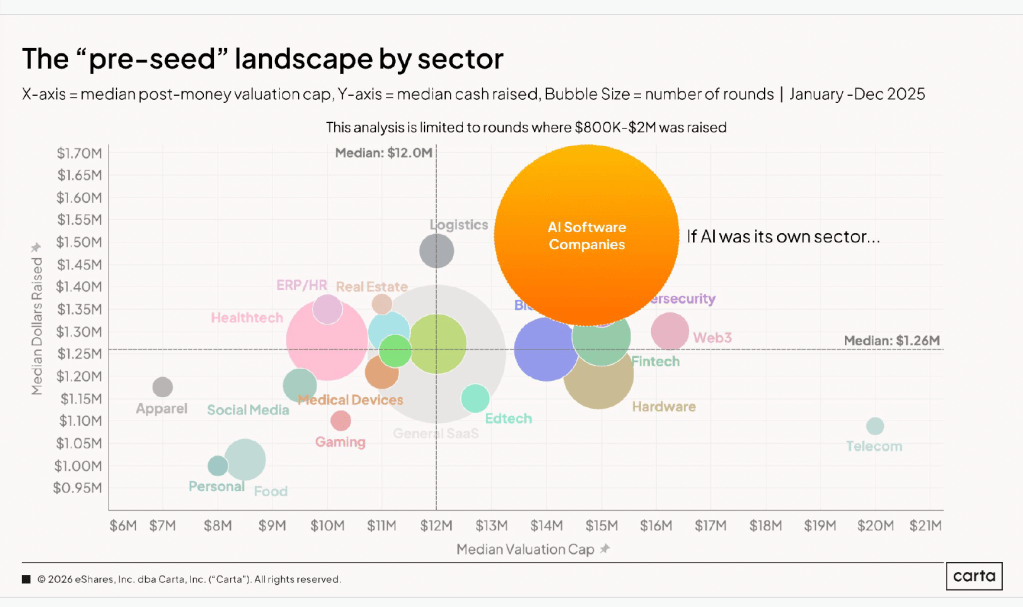
Early 2026 data suggests the venture market has not slowed as much as it has shifted. Capital is more selective, and outcomes are becoming more uneven across companies.
For pre-seed investors, this changes how opportunities should be evaluated.
A wider gap at later stages
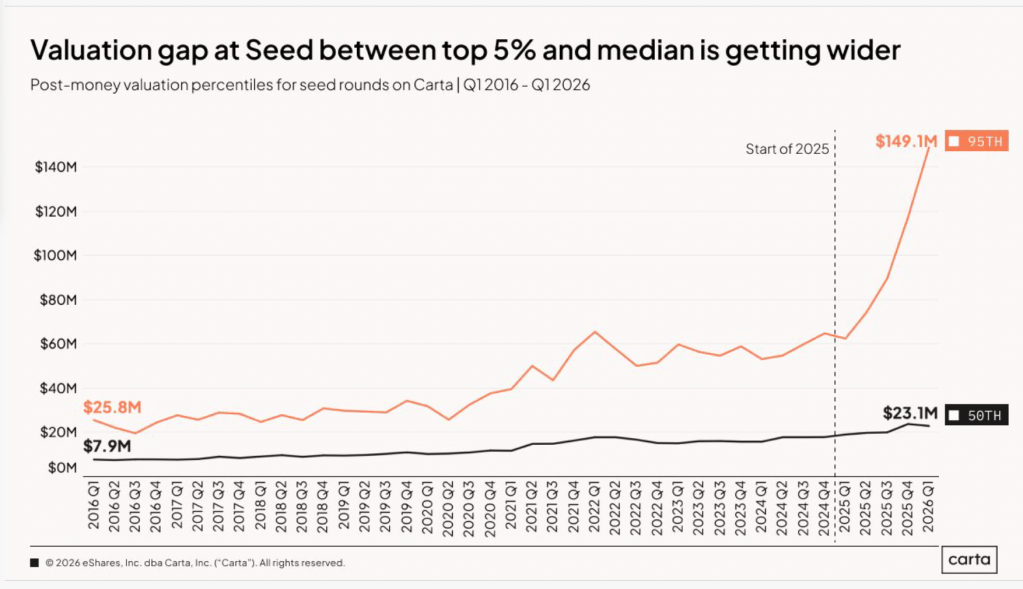
At later stages, a small number of companies continue to raise at strong valuations, while the median remains more constrained. This creates a wider gap between top performers and the rest.
At the pre-seed stage, this often means:
- less competition for early deals
- more companies that are overlooked
- more reasonable entry valuations
Smaller teams and more focused execution
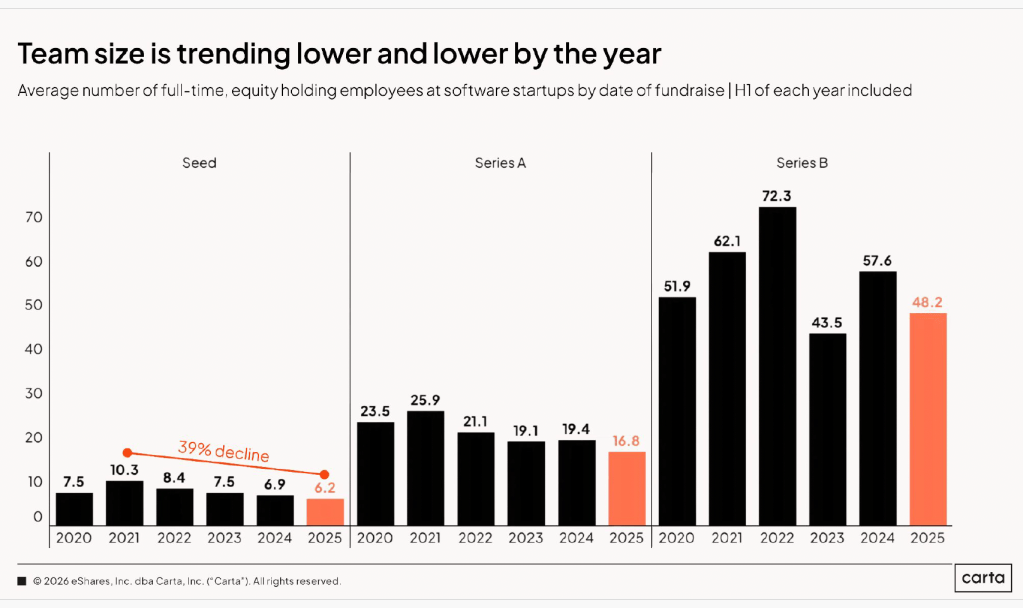
Founding teams are trending smaller, and capital efficiency is becoming more important. In many cases, progress is driven by fewer people with clearer focus.
For investors, this shifts attention toward:
- individual founder quality
- speed of execution
- ability to do more with limited resources
Faster and more standardized rounds
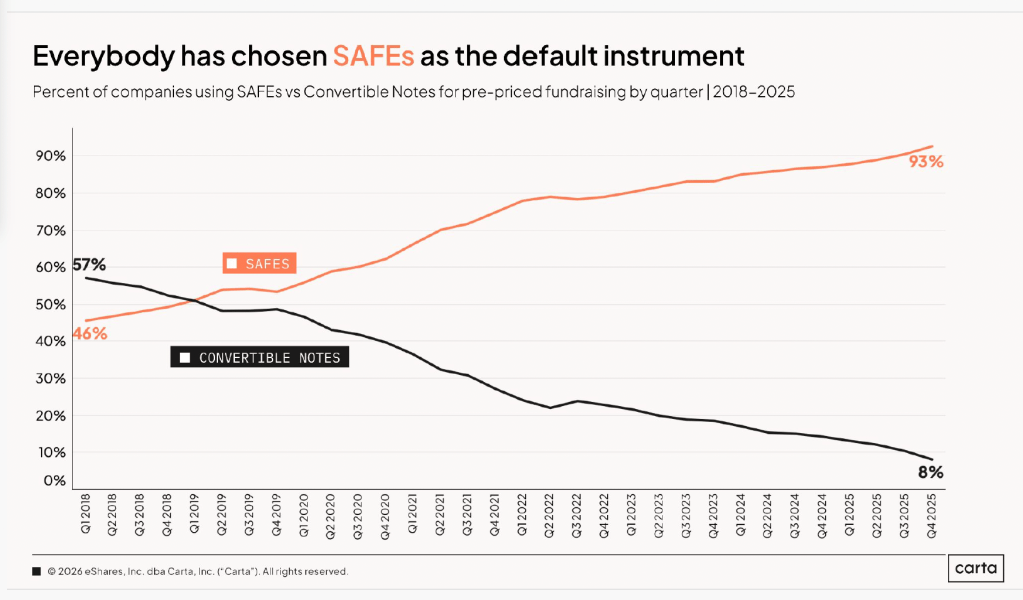
SAFE notes are now the default structure for most early-stage rounds, which simplifies the fundraising process.
As a result:
- decisions happen faster
- access becomes more important
- strong opportunities are often allocated early
Why pre-seed matters more
As later-stage investing becomes more competitive and more priced-in, the earliest stage remains one of the few places where investors can still form an independent view.
This is where:
- early signals are less obvious
- non-traditional founders are often missed
- small differences in judgment can matter over time
Final thought
Pre-seed investing in 2026 requires a more disciplined approach. It is less about reacting to momentum and more about identifying signal early. Join our Lunch and Learn to understand how we evaluate early-stage startups and approach pre-seed investing.


Leave a Reply