
Recent data on Latino entrepreneurship in the U.S. shows a clear pattern.
Immigrant founders are building companies at a strong pace. They are expanding into technology sectors, operating across borders, and competing at the same level as other founders.
But access to capital is not growing at the same speed.
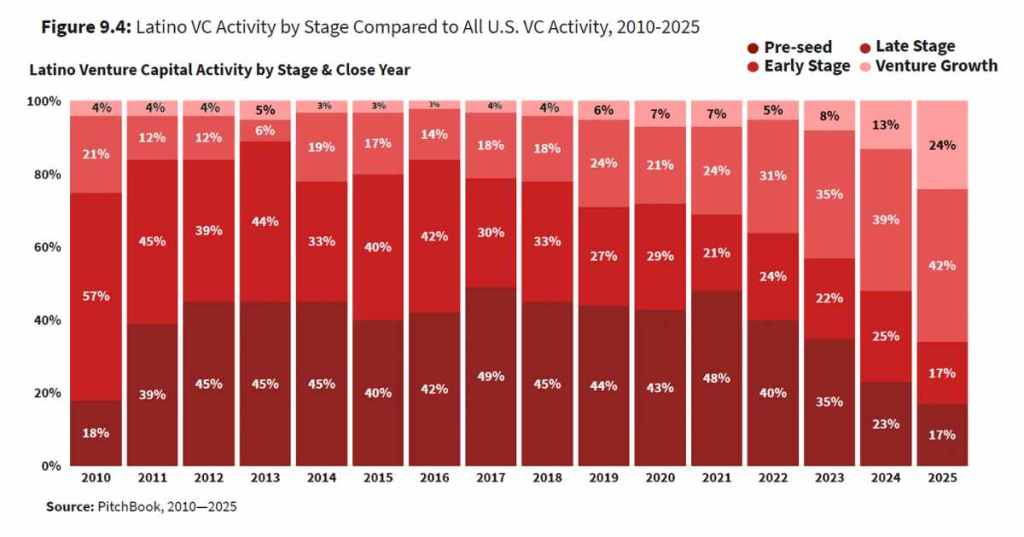
At the earliest stages, participation is shrinking. Pre-seed and seed funding for Latino founders dropped from 2.62% in 2020 to 0.55% in 2025 . Early-stage participation followed the same trend, declining by 75% over the same period .
At the same time, the companies that do raise capital are raising larger rounds. Median deal size reached $6M.
This points to a simple shift in the market.
Fewer companies are getting funded. More capital is going to a smaller group.
The challenge is not the quality of founders. It is access at the entry point.
The report also highlights ongoing funding gaps. Immigrant-led businesses are less likely to receive full funding and often lack clear guidance on how to improve their chances.
This is where networks matter.
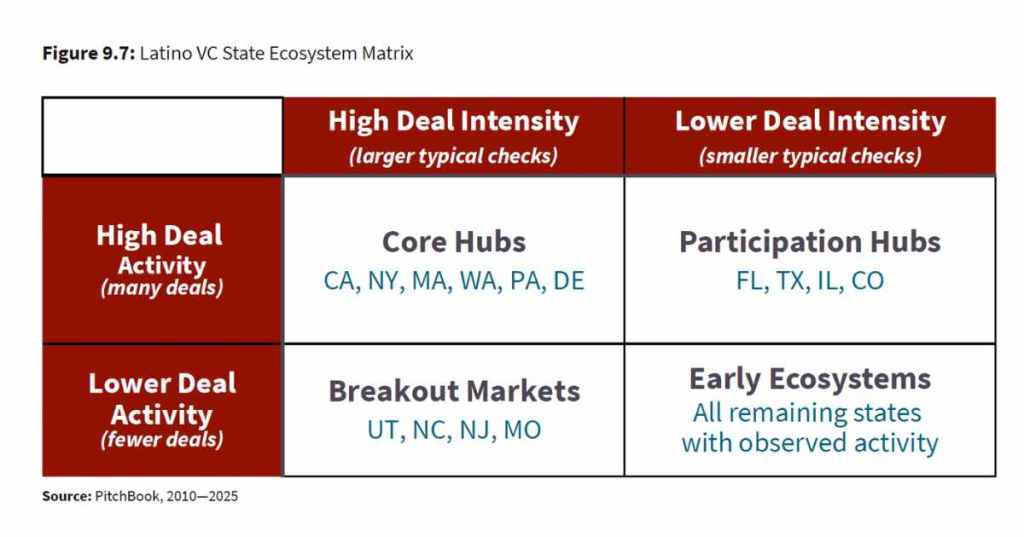
Early-stage capital is not evenly distributed. It moves through relationships, familiarity, and trust. Founders who are outside those networks take longer to access capital, even when they are building strong companies.
Canada is seeing similar conditions.
Early-stage capital is tightening. Angel investment is growing but still limited relative to demand, with $146.2M tracked in 2024 . Venture capital is concentrating into fewer deals, with higher average check sizes and fewer companies funded overall .
At the same time, Canada is attracting a new wave of immigrant founders. Many of them have international experience, technical backgrounds, and access to global markets.
They are building in sectors like AI, clean tech, and vertical software. They are not early in capability. They are early in visibility.
This creates a gap.
A group of founders with strong potential, but limited access to early capital and investor networks.
This is where early-stage investors play a role.
Angel investors are often the first layer of capital. They make significantly more investments than venture capital firms and help companies reach the point where larger rounds are possible .
When this layer is not accessible, fewer companies move forward.
What we are seeing is not a lack of opportunity. It is a mismatch between where talent is coming from and where capital is going.
For investors, this is where attention should shift.
There is a growing group of founders in Canada building solid companies that are not yet visible to the broader market.
Undervalued. Overlooked. Early.
If you want to understand where the next set of companies is coming from, join our next Pitch Day on April 23.
We will be presenting pre-seed startups from this emerging group of founders.
 gsa.vc
Leave a comment